














![Bitcoin Cash [BCH] could be ready for another pump. Here's why...](https://www.blockchainnewsportal.com/wp-content/uploads/2023/08/Bitcoin-Cash-BCH-could-be-ready-for-another-pump-Heres-600x337.png)










If you study the lives of history’s wealthiest individuals, you begin to notice a pattern. Different centuries. Different industries. Different technologies. Yet the same principle appears repeatedly. The greatest fortunes were rarely built through labor alone. They were built through ownership. John D. Rockefeller did not become one of the wealthiest individuals in history because he worked more hours than everyone else. He owned infrastructure. Henry Ford transformed manufacturing not because he assembled every automobile himself, but because he built systems that scaled. The founders of Microsoft did not become wealthy because they personally installed software on millions of computers. They owned the platform. Jeff Bezos did not create Amazon’s success by packing every box. He built and owned the infrastructure. The lesson is remarkably consistent.
The world’s largest fortunes are often created by owning productive systems. Not simply participating in them. This principle is becoming increasingly important as we enter the age of artificial intelligence. For most people, AI represents a tool. Something to use. Something to consume. Something to interact with. But history suggests that the greatest opportunities may not belong to the consumers of AI.
They may belong to those who own pieces of the infrastructure supporting it. This distinction matters.Consumers spend money. Owners create wealth. Consumers use networks. Owners benefit from network growth. Consumers generate value. Owners participate in value creation. For decades, participation in high-growth infrastructure opportunities was often limited. Private equity firms. Venture capital funds. Institutional investors. Large corporations. Ordinary individuals rarely had access. Blockchain technology changed that equation. For the first time in history, decentralized networks could create ownership opportunities for communities around the world. Bitcoin demonstrated this principle. Ethereum expanded it.
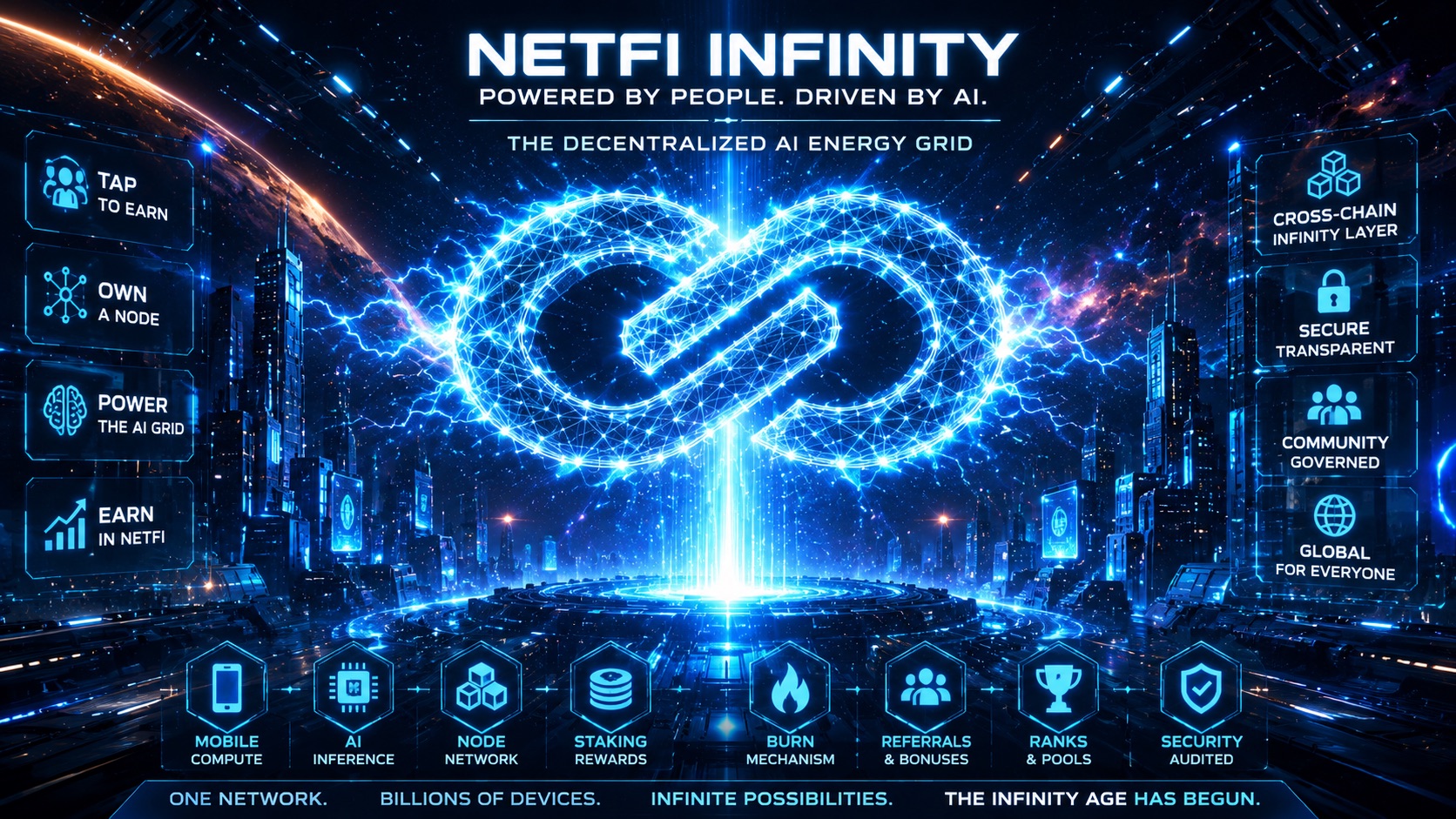
The next generation of decentralized infrastructure projects seeks to apply it to new industries, including artificial intelligence. NetFi Infinity was created with this philosophy at its core. The project is built around the belief that technological revolutions should create ownership opportunities for the people helping support and grow the network.
One of the most fascinating aspects of human psychology is that most people focus on immediate rewards rather than long-term positioning. This is why many individuals recognize opportunities only after they become obvious. When Bitcoin traded for a few dollars, few people paid attention. When it reached global headlines, everyone noticed. When Amazon was a small online bookstore, few people imagined its future. When it became one of the world’s largest companies, its success seemed inevitable.
The same pattern repeats throughout history. People often underestimate exponential growth. They underestimate network effects. They underestimate the power of ownership. The challenge is not identifying successful opportunities after they succeed. The challenge is recognizing them before they become obvious. Artificial intelligence appears to be one of those transformative opportunities. The scale of investment alone is extraordinary. Governments are investing billions. Corporations are investing hundreds of billions.
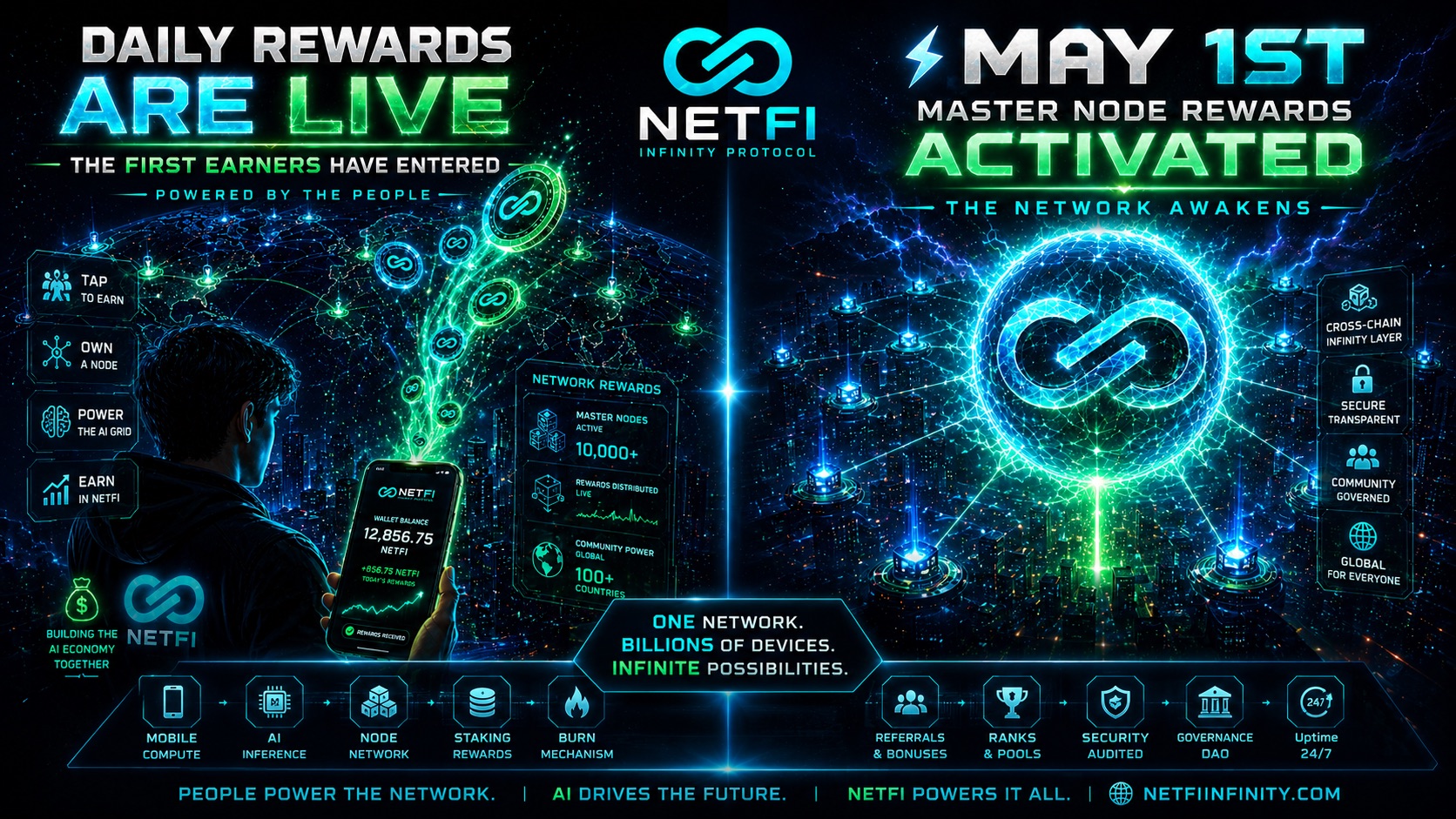
Entire industries are reorganizing around AI. This raises an important question: If AI becomes one of the largest economic forces in history, who will own the infrastructure supporting it?NetFi Infinity seeks to explore a model where ownership can extend beyond corporations and institutions. The ecosystem combines node ownership, staking, participation incentives, governance structures, and long-term AI ambitions into a framework designed around community involvement.
The psychology behind this approach is powerful. When people become owners, their relationship with a network changes. They think longer term. They contribute more. They help grow communities. They become advocates rather than customers. This transformation has been one of the defining characteristics of successful decentralized ecosystems. Ownership aligns incentives. Aligned incentives create stronger networks. Stronger networks create greater value. History suggests that those who understand ownership early often benefit the most from technological revolutions.
The AI era is beginning. The infrastructure is being built. The networks are forming. The next generation of wealth may belong to those who recognize the importance of ownership before the crowd does. The future is not only about using technology. It is about owning a piece of the systems that power it.